Think about how much waste a coffee shop creates in just one morning. Stacks of disposable cups, piles of used coffee grounds, empty milk cartons, and mountains of napkins all end up in the trash.
It’s easy to overlook these details during the daily rush, but they have a significant impact on the environment.
More people today care about where their coffee comes from and what happens to it after they finish drinking it. This is where the idea of a zero-waste coffee shop comes in.
A zero-waste café focuses on sending as little as possible to landfills. It relies on reusing, recycling, and finding creative ways to give materials a second life.
This guide will walk you through setting up your shop, managing daily operations, selecting the right suppliers, engaging with your customers, and handling challenges along the way.
What Is a Zero-Waste Coffee Shop?
A zero-waste coffee shop is a café that aims to send no waste to the landfill. Instead, it focuses on composting, recycling, and using reusable items whenever possible.
The idea is to examine every aspect of the business and identify ways to keep materials in use rather than discarding them.
Even though the name suggests no waste at all, it is nearly impossible to avoid every scrap of waste. The ultimate goal is to minimize it as much as possible and reduce the environmental impact.
In daily food service operations, this can include repurposing coffee grounds, encouraging customers to bring their own reusable cups, and opting for compostable or reusable packaging.
Over 2.25 billion cups of coffee are enjoyed around the world every day. Each cup can create waste through lids, stirrers, milk cartons, and single-use cups.
A zero-waste café model rethinks every step, from sourcing beans to serving different types of coffee in reusable cups or dine-in mugs.
By focusing on smarter use of resources and better waste management, a zero-waste coffee shop proves that it is possible to serve great coffee and care for the environment at the same time.
Planning a Zero-Waste Cafe from the Start
Opening a zero-waste cafe requires careful planning before you ever pull your first espresso shot. From the location to the floor plan, every detail affects how much waste you create and how easily you can stick to your goals.
By setting things up right at the beginning, you can run a smoother operation and connect with customers who care about an eco-friendly coffee shop.
Choosing the Right Location and Layout
The location you choose can make a big difference. Areas with strong foot traffic, especially neighborhoods known for community markets or local shops, often attract people who support green businesses.
Being close to public transportation or bike paths also makes it easier for customers to visit without needing a car.
Inside, the layout should help your team and guests avoid waste. Plan clear areas for separating compost, recycling, and general trash so nothing ends up in the wrong bin.
Leave space for storing reusable cups, dishes, and bins for compostable coffee packaging. A smart layout also helps when working with suppliers who deliver in bulk or reusable containers.
Licensing, Certifications, and Local Regulations
Before opening, check local health and safety regulations regarding the reuse of containers and the handling of food waste. Some cities have composting programs or specific rules for sorting and storing waste. Knowing these details helps you avoid surprises later.
If your city or country offers green certifications, like a “Green Restaurant” label or zero-waste recognition, consider applying. These programs often encourage cafes to work with local suppliers and adopt best practices that reduce waste.
Certifications can also help build trust with customers who want to support businesses that are responsible.
Sustainable Sourcing and Menu Planning
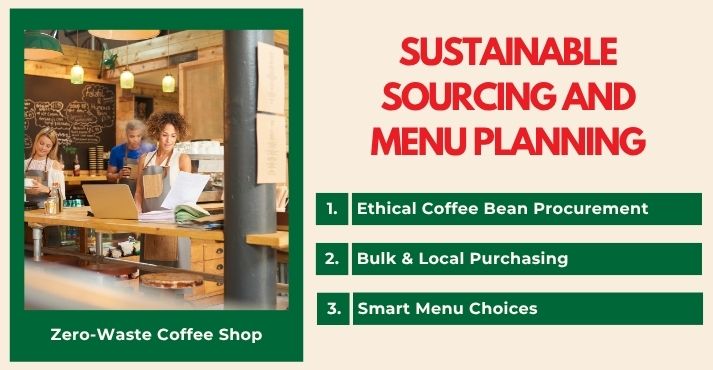
How you choose your ingredients and set up your menu makes a big difference in keeping waste low. Smart choices help support local farms, reduce packaging, and create a stronger story for your café.
1. Ethical Coffee Bean Procurement
Coffee is the primary focus of a cafe. Select roasters and suppliers that use compostable or reusable packaging to minimize waste. Working with partners who focus on ethical coffee sourcing also means fair pay for farmers and better growing practices for the environment.
Look for direct trade, organic, or fair trade options. Ask about roast profiles to match your menu and create a more personal touch. These steps show your commitment to sustainable coffee practices and your dedication to running a green coffee shop.
2. Bulk and Local Purchasing
Buying in bulk reduces packaging and delivery costs. It also helps you keep track of what you use and avoid small, wasteful orders.
Source milk, produce, and baked goods from local suppliers whenever possible. Many small farms and bakeries are open to using returnable crates or bottles. Supporting local producers builds trust and keeps your menu fresh.
3. Smart Menu Choices
A smaller, focused menu helps you avoid over-ordering and spoilage. It also makes prep work easier for your team and keeps storage simpler.
Offer seasonal and plant-based dishes whenever possible. Local fruits and vegetables create bright flavors and reduce the need for imported items. A well-planned specialty coffee shop menu supports your zero-waste goals and attracts new customers seeking fresh, honest food.
Equipment and Systems That Support Zero-Waste
Choosing the right equipment and setting up strong daily systems are crucial components of running a zero-waste coffee shop. These choices make it easier for your team and your guests to avoid unnecessary waste.
Even small changes in how you serve or handle waste can make a big difference over time:
1. Reusable Systems (Cups, Containers, Utensils)
Using in-house mugs and plates for guests who stay is a simple way to reduce single-use waste. For takeaway drinks, a deposit-return program allows customers to bring their cups back next time, keeping disposables out of landfills. Offering a small discount to people who bring their own cup can also encourage repeat visits.
Reusable options often emerge at a coffee trade show, where cafe owners share ideas for reducing single-use plastics and packaging. Besides cups, think about offering reusable containers and utensils for baked goods or sandwiches.
2. Composting and Recycling Stations
A three-bin system with clear labels for compost, recycling, and landfill waste makes sorting easy for everyone. Simple, direct signs help guests understand where each item goes.
If possible, work with a local compost service or install a small composter on-site. Coffee grounds, leftover espresso and lungo pucks, and food scraps can all be turned into compost instead of ending up in a landfill. This approach helps reduce overall trash and supports local soil health.
3. Food Waste Trackers and Inventory Management
Food waste can become a big problem if not monitored carefully. Keeping a daily record of what gets thrown out and what doesn’t sell helps you adjust your ordering and preparation.
Some cafes also closely track expiry dates and plan specials around extra ingredients to minimize waste. By paying attention to these patterns, you can lower costs, keep your menu fresh, and support your goal of becoming an actual zero-waste coffee shop.
Engaging Customers in the Zero-Waste Mission
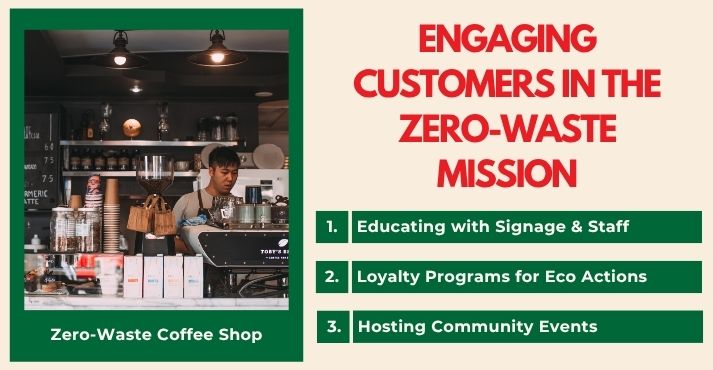
Getting customers involved is just as important as what happens behind the counter. When people understand your goals and feel part of them, they’re more likely to support your efforts and make waste-cutting habits part of their own routine.
1. Educating with Signage and Staff
Staff can help guide customers on where to put compost, recycling, and trash. A quick reminder at the bins goes a long way.
Table cards or digital screens can also explain why you use reusable cups or how composting works. Clear and friendly messages make people feel included, not pressured. Over time, these small steps encourage waste reduction in cafes and help create a cleaner space.
2. Loyalty Programs for Eco Actions
Many people enjoy a little reward for doing the right thing. Offer a free drink after a certain number of visits with a reusable cup or give a small discount each time they bring their container.
Simple stamp cards or apps are effective for tracking these habits. These programs can also strengthen connections with regular customers and encourage them to return.
In regions such as Southeast Asia, cafes tied to daily coffee and tea rituals often find strong support for these initiatives.
For example, Brawn & Brains Coffee in Singapore offers SGD 0.20 off when customers bring their own cup and gives a free drink after 10 such visits. They also allow reusable lunch boxes for food orders, reinforcing their commitment to waste reduction in cafes.
3. Hosting Community Events
Bringing people together can spark new ideas and habits. You could host workshops on zero-waste living, composting at home, or how to make simple swaps to reduce plastic use.
Partner with local eco-groups, roasters, or neighborhood markets to build energy and attract more people. Events like these show your café cares about more than just selling drinks — it’s about building community and supporting long-term change.
Common Challenges and How to Overcome Them
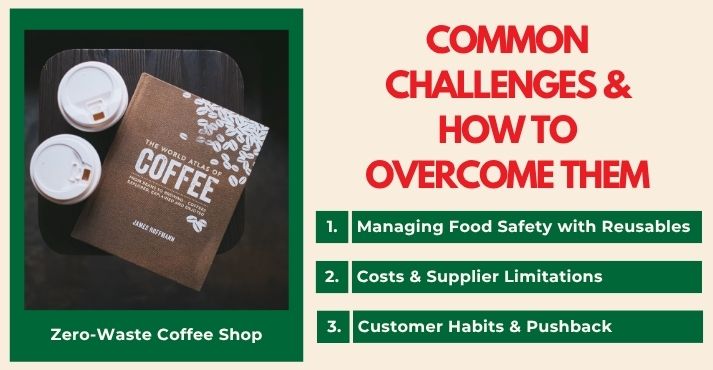
Running a zero-waste coffee shop is rewarding but comes with real challenges. From hygiene to costs and changing customer habits, each step takes patience and precise planning.
1. Managing Food Safety with Reusables
Using reusable cups and containers means being careful about cleanliness. Staff should always check if a customer’s cup is clean before using it. Some cafes set up a small rinse station, allowing guests to wash their cups on site.
It is essential to follow local health guidelines to ensure everyone’s safety. Keeping a few spare, clean cups ready helps maintain smooth service, regardless of the coffee brewing methods you use daily.
2. Costs and Supplier Limitations
Starting a zero-waste system can initially be more expensive. Items like compostable containers and reusable dishware are often more expensive than single-use versions.
It’s helpful to start with small steps and gradually add more changes over time. For example, start by offering reusable cups and slowly expand to other items. As you build relationships with local suppliers and adjust the menu, these changes become easier to manage.
Focusing on high-quality products, such as arabica coffee and fresh local ingredients, can also help attract loyal customers who support these efforts.
3. Customer Habits and Pushback
Changing habits is never easy. Some guests may forget their reusable cup or resist new ideas. Clear reminders, kind staff, and small rewards for bringing their own cups can encourage people to join in.
Over time, these habits can become part of their daily routine and help create a stronger community around the café.
Tracking and Improving Your Impact
Once a zero-waste system is running, it is important to keep measuring and refining it. Tracking progress not only helps you improve but also keeps your team and customers motivated.
Many green coffee shop operations rely on steady data to understand what is working and where they can do better.
Setting clear goals is a good first step. You might track the percentage of waste that gets composted or the number of takeaway cups that are avoided each month.
Small steps, such as measuring how many guests choose in-house mugs for their cappuccinos and lattes, can reveal significant changes over time.
A monthly waste audit can show patterns in what ends up in each bin. Checking sales data or point-of-sale records also helps you identify which menu items generate more waste or require additional packaging.
Sharing results openly builds trust. You can post signs in the café or on social media showing updates, such as “This month we saved 300 cups from the landfill” or “Half our guests chose reusable cups.”
When customers see these real numbers, they feel included and more likely to keep supporting the mission.
Conclusion
A zero-waste coffee shop can bring many good things. It helps the environment, builds strong bonds with customers, and can lower costs in the long run. You don’t need to do everything at once. Start with small changes and grow step by step.
This kind of café can be more than just a place to grab a cup of coffee. It can show your values and inspire others to think differently.
By thoughtfully serving great cappuccinos and Americanos, you create a space that feels good for both people and the planet. It’s an opportunity to lead by example and make a meaningful impact.